Showing posts with label Lucent. Show all posts

Sunday, March 24, 2013

Danny Hillis: The Internet Could Crash - We Need a Plan B.

Here's another interesting TED talk. The speaker is Danny Hillis, the designer of the now defunct "Connection Machine", a very parallel computer with a lot of lights on the front panels. One of those machines managed to show up as a backdrop in one of the Jurassic Park movies. When I was managing a computer center at Bell Labs, we did consider purchase of a "Connection Machine", but it seemed that my users weren't really ready for something way different from the Sun servers and DEC-VAX machines that were the heart of our operation at that time. A "Connection Machine" seemed too risky in any case since the price tag was large and the company attempting to sell us the system was not well established and therefore could (and indeed did)go out of business in the blink of an eye.
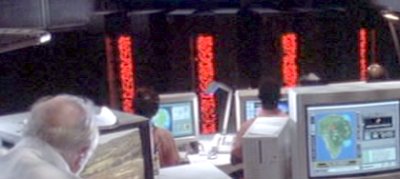
Danny Hillis: The Internet Could Crash - We Need a Plan B

The TED talk was given in February 2013.

Reminds me of the proposal I made to split up the computer center in Murray Hill Building 5. The assumption had been that in the event of a disaster that took out our computer center there, that we'd fall back onto the facilities of the "Murray Hill Computer Center" in Building 2. That might have been a feasible plan when our Building 5 operation was small relative to the size of the Building 2 computer center, but technology and user demand in Building 5 led to enormous growth in storage and compute capacity. It was clear to me that Building 2's computer center didn't have the oomph we'd need if something happened to Building 5. I found a small raised floor area in Building 4 that was slated to be decommissioned and proposed that we move some of our "eggs" out of the Building 5 basket. I wasn't promising that we'd be able to transparently absorb the loss of Building 5, just that it would assure that our users wouldn't be entirely out of business if something happened to one of the buildings.

I was especially nervous about Building 5 because it has a wood-truss roof protected by a water-sprinkler fire protection system. One time, when a pipe in the ceiling burst, Rick, our lead computer operator, described it as "Rick's VAX Wash" as torrents of water poured down on one of our VAX 11/780's. Much to my disappointment, I couldn't stir up any interest in our users who fund our budget in splitting the computer center partially out of Building 5. Ultimately I left that organization for a less political and more technical position elsewhere with Bell Labs, Murray Hill.

But God saw to "meting out justice". That winter heavy snows covered the roof of Building 5, and then rain saturated the accumulated snow, but temps dropped and turned the whole pile on the roof to heavy ice that refused to slide off the arched roof, a significant static load. The load was too much for the wood trusses and one of them snapped during the night, shifting the load to its neighbors, which in turn similarly snapped. In the morning, the only visible symptoms were that the suspended ceiling tiles inside the building were strangely out of place. This led to the building people figuring out what was wrong and evacuating the building. Desks were set up in the main lobby of Building 6 so people could continue to have a place to work. The computer operators were issued hard hats and Building 5 was closed to all but "essential personal". Rick called it "closed to all but dispensable personnel" until the trusses could be repaired several months later.

I admit to some small pleasure in quietly thinking, see, I told you we needed a Plan B. Alas, I suspect that Hillis's clarion call for a Plan B Internet is going to get as little support as my call for a Plan B for the Building 5 computer center. If it happens at all, maybe the Plan B Internet will be a side-effect of the transition to IPv6?? But if the IPv6 Internet is as vulnerable to attack as today's IPv4 Internet, that isn't much of a plan B as it merely requires a second attack to take down the 2nd Internet. Should Plan B look way different from the traditional international Internet and just focus on smaller communities (per country or per state, with paranoid gateways to get from region to region)? I don't see how to do it "safely" without having stronger "central control" than the Internet model has today. Big Government central control (ala the "Great Firewall of China") makes me plenty nervous, so I hope the network gurus of the world have some better ideas.

Please add your comments to this blog if you have suggestions on how to get a Plan B in place. What would it's scope be? What would it look like? How would you test it?

Monday, March 8, 2010

Increasing Innovative Work Behavior

Increasing Innovative Work Behavior

Pretty much random travels on the web this morning brought me to an interesting little presentation on Increasing Innovative Work Behavior by  Gisela Jönsson.    The slide show is on her blog, http://www.mindspark.se/blog/, and though the slide show is in English, her blog is mostly in Swedish, which I can't read.  So, for all I know, she may have lots of other wonderful things to say, but they whizzed right by my English-only head.

As summarized on her opening slide:

Fear does not make fertile soil for ideas.  To succeed at innovation, you must learn to embrace failure.

The posting I'm recommending is dated 3/7/2010.  Based on this sample of 1, I'm impressed with the results she got from using the presentation tool http://prezi.com/, which I confess I hadn't heard of before.  I'd have been happier if I could have figured a way to snag a copy of her slide show instead of having to depend on the lifespan of the URL I referenced for you to be able to see Gisela's slide show.  Anyhow, enjoy.

A link to another place for her slide show outside her blog:  http://prezi.com/fmwnrxxhje3c/increasing-innovative-work-behaviour/.

Drew

Thursday, October 8, 2009

Financial engineering


Financial engineering


Re-engineered to Smithereens is interesting reading. Linkedin.com pointed me to the piece via a posting there by the piece's author. I think her essay dwells a bit much on baby boomers, but maybe you have to have come from Lucent to see how losing sight of the purpose of a company can mess up the jobs of far more than one generation of (former) employees.  What the financial engineers seem to overlook is that if a company's stated mission is no grander than "Our mission is to make money for the stockholders", that that is not going to inspire many of the company's staff to rally round the corporate flag.  My undergrad degree is in Industrial Engineering and Operations Research, so I kind of can see where the numbers argue that its a great idea to sell off all the factories and outsource all the production of the company's products, but somehow along the way, the company (formerly known as Western Electric) lost the idea that the way the company earns its money is to sell products.   I'll not insist that you have to manufacture the products in order to sell them, but somehow with the factories gone, the management seemed to lose its sense of direction.  Didn't anyone understand that to sell products with a fat profit margin, you need to have products that people can't get from anyone else, not commodities.  Last year's gee-whiz item is next year's commodity (if not sooner).  Seems to me that things worked out better when the Great Depression idled the factories and management's reaction was to find ways to keep the factories working, even if that meant producing washing machines or some such things that are far out of the company's usual scope.  (Confession:  I tried to find something on the web to substantiate my assertion that Western Electric built washing machines during the Great Depression, but was surprised to learn they were making washing machines and sewing machines in the early 1920's.   Not what I expected to find   But I did find of Western Electric in the Great Depression:

The company paid its employees to make "articles in general
demand" from furniture to cigarette lighters to keep them employed,
then it distributed the goods at-cost through the company stores.

according to http://www.u-s-history.com/pages/h1802.html).  But now, in the 21st century, with no factories, the management just seems to blame the economy and look for more costs to slice ("The beatings will continue until company morale improves"). 

They sold off vast portions of the company, including the chip-business, which produces the raw materials (integrated circuits) from which innovative products can be built.   I'm a bit less comfortable with the notion that all the chips we'd ever need can be purchased from elsewhere.   If we buy commodity chips, how distinctive can our products be?   And if we pay other companies to make custom chips to our specifications, who is going to pocket the profit margin on those chips?   Surely Lucent management didn't make the humerous assumption that they are consumate deal-makers!

Lucent had some interesting starts on products that far out-distanced what the marketplace was currently demanding.    I'm thinking about the micromirror based optical router, long since canceled to the best of my knowledge.   "Nobody" needs that kind of bandwidth capacity.   Why walk away from a future market.   Wouldn't it have been smarter to help cultivate demand for more bandwidth.   Lucent had pioneered development of HDTV.    Why not work with web cam companies to bring HDTV to the PC?   HDTV video chats might step up the demand for IP bandwidth.  Youtube, I hear is already pressing the capacity of Internet service providers.   Verizon is gambling on the future by building FIOS now.   More bandwidth than the customer demands at present, but it'll take some real work and hefty investment for the cable companies to provide as much capacity as FIOS can.   Capacity isn't all that's needed to compete with the cable TV companies, but at least Verizon apparently noticed that they had competition and had to do something about it for Verizon to have a future.

(Disclosure:    I'm a Cablevision "triple play" subscriber.   I use Vonage for my home phone [though the Cablevision phone line has been useful to provide a phone for Aunt Dolly, who currently lives here].   My only monthly bill from Verizon is from Verizon Wireless for cell phone service.  [In other words, I'm not a FIOS subscriber even though they tell me it is now available in my neighborhood].  Since I am no longer employed by Bell Laboratories, I have so far managed to resist the call of the marketplace to move on up to HDTV.   I watch HBO on a plain old NTSC [that is, old non-digital] television set).

"Field of Dreams" projected the kind of thinking that Lucent management lacked.   "Build it and they will come".  But somehow Lucent was never interested in a market space until Cisco or someone had demonstrated that there was a significant market there.   That's not leadership.   "Me too" products are not a good way to bang big bucks to the bottom line.   At Lucent, the bottom line was "a lot fewer bottoms on the line".

Drew